Dealership CRM · Averon product · Deployed for Shiv Shakti Cars
Dealer CRM Every broadcast becomes data. Every reply finds its way home.
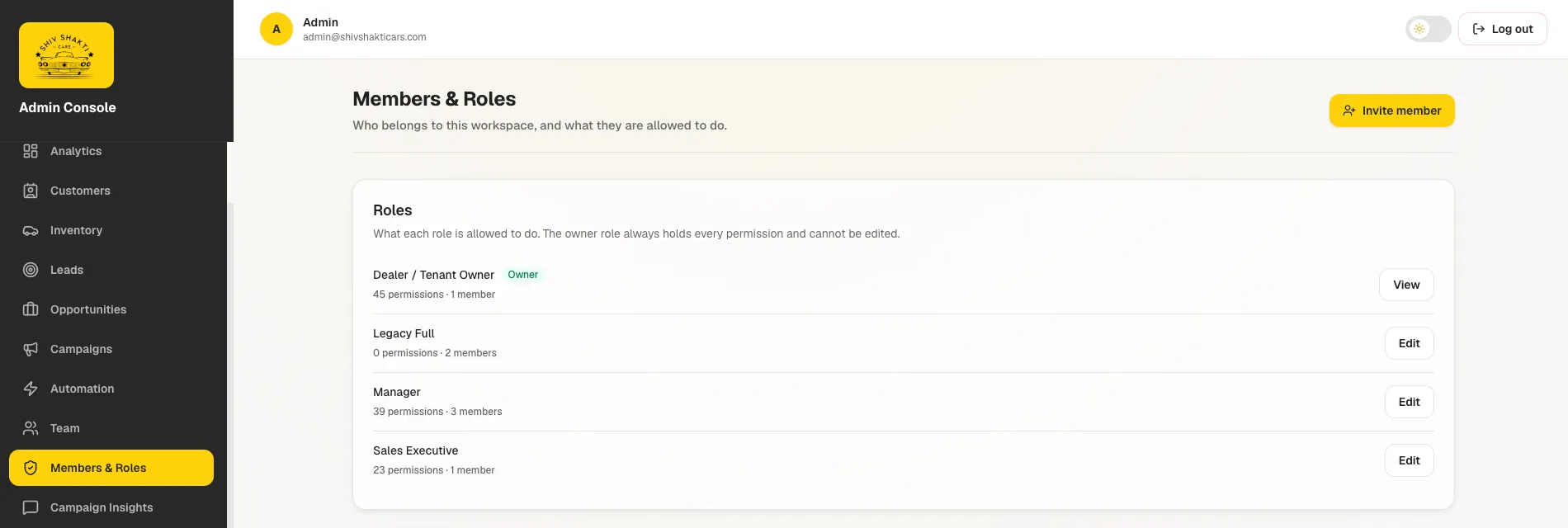
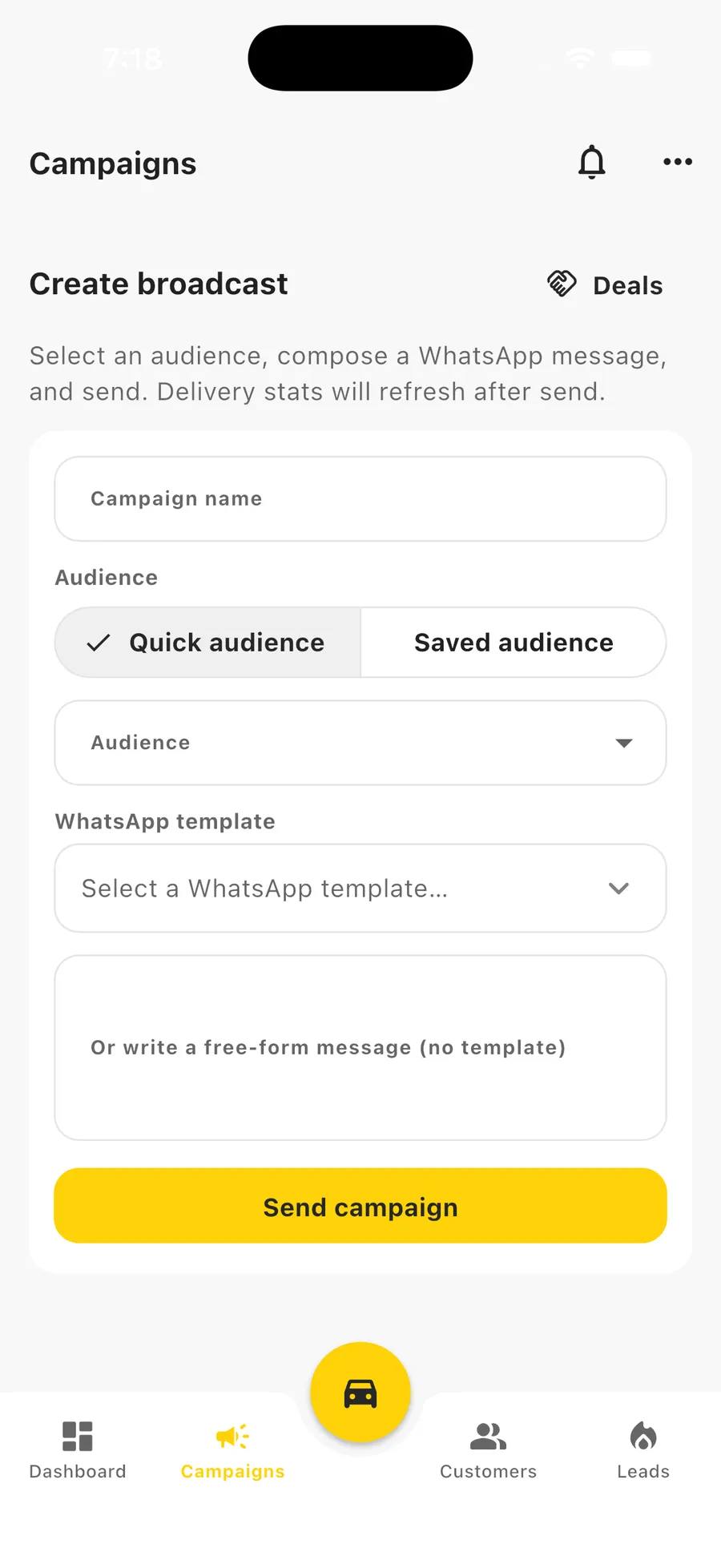
Dealer CRM is Averon's multi-tenant CRM and WhatsApp campaign platform for vehicle dealerships, deployed for Shiv Shakti Cars. Sales executives broadcast as they always have; the system extracts the vehicle and intent, links each reply to the broadcast that prompted it, and records both as leads.
- Status
- Release 1.0
- Surfaces
- Android & iOS agent app · Web admin console · Platform operator console
- Deployed for
- Shiv Shakti Cars
The problem
Why Dealer CRM exists
Dealership sales activity runs largely on WhatsApp. The channel works, but it keeps no usable record: broadcasts stay on individual phones, replies are scattered across chats, and renewals and follow-ups depend on memory.
Built for
Car dealerships: sales executives working from a phone between test drives, managers and owners running the business from a browser, and platform operators managing several dealerships.
What it does
Key capabilities
Structured deals from free text
A broadcast like “FORTUNER 4X2 AT BLACK AVAILABLE” is parsed into make, model, variant, fuel and whether the sender has the car or wants it, with a confidence score and agent correction.
Reply correlation
Inbound replies are linked back to the campaign that prompted them, closing the loop from a broadcast to the people who actually answered it.
Campaign approval workflow
Approvals bind to a specific version of a campaign, so editing an approved campaign invalidates the approval instead of quietly re-arming the send.
Queue-driven delivery
Sends run through background workers, never inside a request. If the messaging provider fails mid-campaign, the send stops cleanly and a retry re-sends only what failed.
Automated reminders
Insurance expiry, service due dates, loan EMIs and stale leads surface as notifications on the assigned agent's phone instead of relying on memory.
Multi-dealership platform
Designed to support several dealerships on one deployment, with tenant isolation enforced in the query layer, dealership-defined roles, and per-tenant feature flags from a platform console.
Engineering highlight
Linking a reply to the broadcast that caused it
WhatsApp does not say which message a reply is answering. When a customer uses the native reply gesture the provider includes a reference, but most people just type. The platform resolves deterministically when it can, falls back to the most recent outbound message within a 72-hour window when it cannot, and returns “no correlation” rather than ever failing the webhook. The parts of the system that guess can never take down the parts that must not fail.
Where it stands
Release 1.0
Release 1.0 of the mobile application was staged to Google Play internal testing and Apple TestFlight in July 2026, together with the administration console and backend.
Built to last
- Permissions resolved from the database on every request, so a demoted user loses access immediately rather than when a token expires
- Structural tests fail the build if any mutating route ships without an authorisation check
- CSV and vCard imports report invalid rows individually instead of rejecting the whole file
- Scheduled encrypted backups to S3 with a documented restore path
Technology
- Flutter
- Next.js
- React
- TypeScript
- Node.js
- Express
- PostgreSQL
- Redis
- BullMQ
- WhatsApp Business API
More products
Discuss your project
Tell us what you need to build and we will talk through the scope, architecture and how an engagement could be structured.
Start a conversationRelated services